from phhsalumni.org
by Jim (Money) Richards
THE OLD HIGH SCHOOL AND THE NEW HIGH SCHOOL
The chief thing I remember about the old High School was the smell --- the pungent, penetrating scent of all that varnished, scrubbed and waxed woodwork. Wooden floors, wooden staircases, wooden banisters, wooden doors, desks, tables, chairs --- maple, walnut, oak, pine, all glowing golden and umber, all either dusty or oily, all creaking, squeaking, echoing, all suffusing the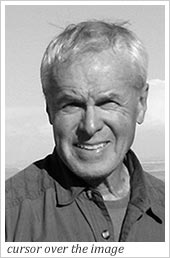 atmosphere with their own quietly aging aromas, while playing back to the
appreciative nose the absorption of generations of dropped basketball socks,
cheap hair spray, musty books, bag lunches, old paint and the fine, invisible
dust of ages sifting down from the attic.
atmosphere with their own quietly aging aromas, while playing back to the
appreciative nose the absorption of generations of dropped basketball socks,
cheap hair spray, musty books, bag lunches, old paint and the fine, invisible
dust of ages sifting down from the attic.
Miss Hammond, the French teacher, had the best room in the house, three flights up, large and airy, with dormer windows above the tree tops. She used to sit on the edge of her desk swinging one shapely gam while explaining most fetchingly the difference between, "Ooo, j'ai chaud!" and "Ooo, je suis chaud!"
P.J. Bigelow was the principal. Little Napoleon, we called him. A scowling, humourless, loud-voiced man apparently disliked by the entire student body as far as I could make out. He fancied himself a parade ground martinet and liked nothing better than to bark complicated marching orders at "his" cadet corps, then berate us for our clumsiness and slovenly appearance.
Unlike Keith Rose, the P.T. and Math teacher, who, without pads or helmet, would play the part of opposition quarterback in practice with the senior football team, undergoing many an enthusiastic sacking that would have sent a lesser man whimpering off the field. I remember a particularly rowdy basketball trip with much friskiness going on in the back of the bus; Keith Rose stood up, reeled down the aisle and insinuated his grinning, over-coated, Homburg-hatted bulk into the middle of the crowd on the back seat, thereby effectively chaperoning the depravity and probably saving several coeds their tenuous virtue, at least temporarily.
And John Hill, English teacher, a quiet, mild-mannered hero, with a dry wit and a collection of shapeless, tweedy sports jackets with leather elbows. My clearest remembrances of Mr. Hill cover the month or so he came into class carrying a weighty edition of "Mein Kampf" under his arm. As the bookmark worked its way slowly from the front cover toward the back, I got the impression that we were increasingly viewed as his personal kampf, his destiny, his burden, his honourable toil.
John Hill was Editor-In-Charge of the school yearbook and also produced various plays for the school drama society. I remember on one occasion he detailed me to build and paint some scenery. I said fine, but it would go much quicker if I could cut the wood in my father's workshop. Without batting an eye, he handed me the keys to his fire-breathing Pontiac coupe and told me to find a couple of volunteers to help load and carry. "And if you put so much as a scratch on that car, Money, don't bother coming back."
We assembled the scenery pieces in the attic, across from Miss Hammond's room and right over Fraser Hogle's home room. Now there was another unpopular teacher, rotund and pompous, with a peculiar rolling gait that prompted many an unflattering speculation having to do with possible digestive accidents. Fraser Hogle taught Latin, possibly the most agonizingly boring subject ever invented (although in later life I did come to appreciate its fountainhead origins of several well-known contemporary languages).
On this particular occasion, the two volunteers and I were working in the attic, right above the Latin room, into which our Grade Ten class was due to move at ten o'clock. We hatched our plot and quietly assembled our devices. After the bells died down, we positioned ourselves directly over the Latin room, waited exactly five minutes and then cut loose with all we had. We hammered, banged and sawed; we dropped buckets of nails, kicked over piles of 2x4s; I even went through a floorboard with a sledgehammer. We were just getting thoroughly into the swing of things --- one of the guys was climbing a stepladder with a load of ballistically-destined scrap lumber --- when the attic door burst open and in staggered Bob Ough, laughing so hard he could hardly stand up. "What the HELL's going on?" We explained and asked if they could hear it down below. "Hear it?" he gasped, "It stopped poor old Fraser dead in his tracks, in mid-waddle, in mid-sentence. We couldn't hear him any more. It was deafening. The ceiling lights were bouncing around on their chains; there was plaster dust coming down over everything. It was wonderful!"
We moved to the new High School in late 1955, I guess it was. I remember because I got detailed by Mr. Hill to do the yearbook cover that year. "Money, I think you should do something that looks like a blueprint of the new school." So I went up there to that muddy building site, drew a couple of crude sketches and produced an almost equally-crude cover drawing, embarrassing by today's standards but acceptable enough in those days before photocopying, when the entire yearbook was churned out on a Biblical-technology machine called a Gestetner Duplicator.
My memory of moving day, or days, is that we carried practically the entire school up over the hill to the new building, by hand and on foot. Entire classes were detailed to carry, say, the whole science lab equipment inventory or all the art department supplies. We were told strictly to stay on paved town streets. The route was barked out at assembly by P.J. with pointer and map, as though sending a battalion on a forced march through dangerous territory. Obviously, we boys thought this was a load of crap when there was a much shorter route, up over what was called Monkey Mountain, by way of a non-paved road. We skipped gleefully across the playing field (sorry P.J., "parade ground"), and over the embankment carrying our burdens, squelched and slithered up the hill, getting thoroughly covered in goo and arrived at the new school at least fifteen minutes before the girls and the conscientious objectors. Except P.J. was there to meet us, barking like an angry sea lion. "ALL YOU PEOPLE WITH MUDDY SHOES --- AN HOUR'S DETENTION TONIGHT!"
For months, the new school was, to put it mildly, a trial. Nothing was finished, nothing worked properly. The lights went out; the bells rang uncontrollably; the lockers weren't installed; the heat didn't work; the gymnasium had no floor; the clocks went mad, hands spinning dementedly; the fire alarm went off two or three times a day. But we loved it anyway. Nobody complained. Why not? Because we had all this space, all this light, all this smell of newness and the excitement at being the first to christen this virgin ship. It was a great time and, as the builders gradually ironed out the bugs, it became a great school in which we began to take much pride and in which we actually seemed to learn a thing or two.
from phhsalumni.org
EFFECTIVE WITH U.S. NATURALIZATION, MAY 22/2002: OFFICIAL NAME CHANGE FROM
James Edward Money
TO
James Eagle Richards.
Following PHHS, worked as DJ on CHUC, Cobourg, then to Bermuda on ZBM Radio, then New York on WRUL.
Went into advertising in NY (Benton & Bowles, J. Walter Thompson), then to London as commercial director. Then drove overland, London-Capetown, Perth-Sydney, Australia, where set up own film company, Challenges Accepted, 15 years, shooting TV commercials all over the world. Many adventures! Took up flying sailplanes in competitions in Oz. Then back to States in '89 to Lucasfilm. Now (3 marriages, 2 kids later), freelancing, writing, painting, looking forward to "dropping out" and living near some mountains/water, building the dream home, sailing, camping, stoking up lifelong interest in trains and model building, also traveling the world, etc. Whew.
Obituary
James Edward 'Jim' Richards
March 17, 1938 - March 19, 2016
from The Durango Herald April 14, 2016
Jim was born on March 17, 1938, in Surrey, England, to Gladys E. and Bertram R. Money. The family moved to London in the early spring of 1940. One year into WWII, the city was bombed for 57 consecutive nights by the German Luftwaffe, and on every occurrence the family had to seek safety in air raid shelters. As soon as he was able, his father moved Gladys and Jim to a safer location on a farm in the English countryside. After the war, and because of his father's job as a civil engineer, Jim moved constantly, and by the time he was ten, he'd attended seven different schools.
When he was twelve, the family immigrated to Ontario, Canada, where Jim was finally able to have a more stable life. He learned to drive tractors and was hired by neighboring farmers to help in the fields. His deep love of trains began from the first time he heard a locomotive roar past his house. He fished, hunted, and hiked the woods and thought he was the luckiest kid alive. In high school, he was drum player for a dance band he assembled, and the group often played at local gatherings. After graduating from high school, and because of his love of popular music, he was hired as a disc jockey at the local radio station. But eventually he wanted to expand his horizons and sought work elsewhere. When an offer came to work at a radio station in Bermuda, he didn't think twice. Pulling up stakes, he changed his last name to Richards, and began his new job as a disc jockey, producer, and writer, focusing on his favorite musical genre, jazz. He talked his employers into assignments that piqued his interest, which broadened the scope of his duties. Among other ventures, he recorded conversations with jet pilots from the local airfield and talked them into taking him aloft on their training flights. He also finagled trips to Seattle, Washington, to conduct interviews at the World's Fair. Other assignments followed, and after experiencing a world much larger and more varied than Bermuda, he moved to New York City to begin a career in advertising at Benton & Bowles and J. Walter Thompson. Craving an even more satisfying and adventurous life, he moved back to England and began solidifying plans to sail around the world, a dream from an early age.
Deciding to start his sailing odyssey from Sydney, Australia, he purchased a second-hand Land Rover, outfitted it to withstand the rigors of off-road travel, joined a caravan of six vehicles, and drove from London to South Africa – a journey of 6 months. After many fascinating and sometimes harrowing experiences, he arrived at Cape Town and sailed to Perth on the west coast of Australia. Next, he drove through the outback, Australia's "Red Center," and arrived in Sydney covered with dust and ready for his next adventure.
Then Jim's life took an unexpected turn. Instead of sailing around the world as planned, he started down a different path. At the time of his arrival, Australian television was transitioning from black and white to color. Due to the knowledge gained from his experiences in the U.S., he was sought after to direct commercials using this new technology. Initially he worked for several advertising agencies but then formed his own company, Challenges Accepted – so named because he was willing to take on seemingly impossible assignments. In addition to Australia, his projects took him to Europe, the U.S. (including Hawaii and Alaska), Canada, England, Southeast Asia, and New Zealand. Challenges Accepted, which Jim ran for 15 years, became Australia's leading production house. Eventually he decided to return to the U.S., a place he loved and considered to be his true home, working in New York City and Los Angeles. Fulfilling yet another dream, he obtained his U.S. citizenship.
After 25 years as a director, creating over 1,600 commercials and receiving over 150 awards for his cutting-edge and trend-setting commercials, Jim decided it was time to retire and to look for a place to spend the rest of his life. Three years of searching brought no satisfaction until he and his wife, Jean, drove into Durango one autumn afternoon, and with a mutual sigh of relief, realized that they had found the perfect spot.
From the age of ten, Jim had imagined a place where he'd like to live – a mountain home overlooking a valley and backed by pine trees. With his Challenges Accepted spirit and enthusiasm, he eventually found that location in Durango's Animas Valley. For the next ten years, he and Jean landscaped the property and created the home of their dreams. He built a world-class model railroad in the basement. In the studio above, he wrote The Road to Narromine about his experiences flying sailplanes on the edge of the Australian outback. Jim also wrote "The Grammar Police," a humorous blog where he vented his annoyance and frustration over the ignorance and misuse of the English language – he hoped to educate his readers as a side effect.
In addition to all the above, Jim was a prize-winning model builder; a pastel and pen & ink artist; an avid reader; a jazz aficionado; a raconteur; an open-water scuba diver; a sailor; a runner; and a mountain biker.
Full of hopes, dreams and plans for the future, Jim was diagnosed with Stage 4 pancreatic cancer the first week of 2016. On March 19th he passed away in the home he loved, with Jean by his side. This amazing man will be deeply missed by his many friends and acquaintances from Colorado and around the world.
He is survived by his wife, Jean Richards of Durango; his son, Linn (Kat) Money of Sydney, Australia; his daughter, Christine (Robin) Miller of Ontario, Canada; and granddaughter Madeleine Miller.
There will be a celebration of Jim's life in the near future, when the trees in the Animas Valley are bursting with bright new foliage, a sight that brought joy to his heart.
by Jim (Money) Richards
THE OLD HIGH SCHOOL AND THE NEW HIGH SCHOOL
The chief thing I remember about the old High School was the smell --- the pungent, penetrating scent of all that varnished, scrubbed and waxed woodwork. Wooden floors, wooden staircases, wooden banisters, wooden doors, desks, tables, chairs --- maple, walnut, oak, pine, all glowing golden and umber, all either dusty or oily, all creaking, squeaking, echoing, all suffusing the
atmosphere with their own quietly aging aromas, while playing back to the
appreciative nose the absorption of generations of dropped basketball socks,
cheap hair spray, musty books, bag lunches, old paint and the fine, invisible
dust of ages sifting down from the attic.Miss Hammond, the French teacher, had the best room in the house, three flights up, large and airy, with dormer windows above the tree tops. She used to sit on the edge of her desk swinging one shapely gam while explaining most fetchingly the difference between, "Ooo, j'ai chaud!" and "Ooo, je suis chaud!"
P.J. Bigelow was the principal. Little Napoleon, we called him. A scowling, humourless, loud-voiced man apparently disliked by the entire student body as far as I could make out. He fancied himself a parade ground martinet and liked nothing better than to bark complicated marching orders at "his" cadet corps, then berate us for our clumsiness and slovenly appearance.
Unlike Keith Rose, the P.T. and Math teacher, who, without pads or helmet, would play the part of opposition quarterback in practice with the senior football team, undergoing many an enthusiastic sacking that would have sent a lesser man whimpering off the field. I remember a particularly rowdy basketball trip with much friskiness going on in the back of the bus; Keith Rose stood up, reeled down the aisle and insinuated his grinning, over-coated, Homburg-hatted bulk into the middle of the crowd on the back seat, thereby effectively chaperoning the depravity and probably saving several coeds their tenuous virtue, at least temporarily.
And John Hill, English teacher, a quiet, mild-mannered hero, with a dry wit and a collection of shapeless, tweedy sports jackets with leather elbows. My clearest remembrances of Mr. Hill cover the month or so he came into class carrying a weighty edition of "Mein Kampf" under his arm. As the bookmark worked its way slowly from the front cover toward the back, I got the impression that we were increasingly viewed as his personal kampf, his destiny, his burden, his honourable toil.
John Hill was Editor-In-Charge of the school yearbook and also produced various plays for the school drama society. I remember on one occasion he detailed me to build and paint some scenery. I said fine, but it would go much quicker if I could cut the wood in my father's workshop. Without batting an eye, he handed me the keys to his fire-breathing Pontiac coupe and told me to find a couple of volunteers to help load and carry. "And if you put so much as a scratch on that car, Money, don't bother coming back."
We assembled the scenery pieces in the attic, across from Miss Hammond's room and right over Fraser Hogle's home room. Now there was another unpopular teacher, rotund and pompous, with a peculiar rolling gait that prompted many an unflattering speculation having to do with possible digestive accidents. Fraser Hogle taught Latin, possibly the most agonizingly boring subject ever invented (although in later life I did come to appreciate its fountainhead origins of several well-known contemporary languages).
On this particular occasion, the two volunteers and I were working in the attic, right above the Latin room, into which our Grade Ten class was due to move at ten o'clock. We hatched our plot and quietly assembled our devices. After the bells died down, we positioned ourselves directly over the Latin room, waited exactly five minutes and then cut loose with all we had. We hammered, banged and sawed; we dropped buckets of nails, kicked over piles of 2x4s; I even went through a floorboard with a sledgehammer. We were just getting thoroughly into the swing of things --- one of the guys was climbing a stepladder with a load of ballistically-destined scrap lumber --- when the attic door burst open and in staggered Bob Ough, laughing so hard he could hardly stand up. "What the HELL's going on?" We explained and asked if they could hear it down below. "Hear it?" he gasped, "It stopped poor old Fraser dead in his tracks, in mid-waddle, in mid-sentence. We couldn't hear him any more. It was deafening. The ceiling lights were bouncing around on their chains; there was plaster dust coming down over everything. It was wonderful!"
We moved to the new High School in late 1955, I guess it was. I remember because I got detailed by Mr. Hill to do the yearbook cover that year. "Money, I think you should do something that looks like a blueprint of the new school." So I went up there to that muddy building site, drew a couple of crude sketches and produced an almost equally-crude cover drawing, embarrassing by today's standards but acceptable enough in those days before photocopying, when the entire yearbook was churned out on a Biblical-technology machine called a Gestetner Duplicator.
My memory of moving day, or days, is that we carried practically the entire school up over the hill to the new building, by hand and on foot. Entire classes were detailed to carry, say, the whole science lab equipment inventory or all the art department supplies. We were told strictly to stay on paved town streets. The route was barked out at assembly by P.J. with pointer and map, as though sending a battalion on a forced march through dangerous territory. Obviously, we boys thought this was a load of crap when there was a much shorter route, up over what was called Monkey Mountain, by way of a non-paved road. We skipped gleefully across the playing field (sorry P.J., "parade ground"), and over the embankment carrying our burdens, squelched and slithered up the hill, getting thoroughly covered in goo and arrived at the new school at least fifteen minutes before the girls and the conscientious objectors. Except P.J. was there to meet us, barking like an angry sea lion. "ALL YOU PEOPLE WITH MUDDY SHOES --- AN HOUR'S DETENTION TONIGHT!"
For months, the new school was, to put it mildly, a trial. Nothing was finished, nothing worked properly. The lights went out; the bells rang uncontrollably; the lockers weren't installed; the heat didn't work; the gymnasium had no floor; the clocks went mad, hands spinning dementedly; the fire alarm went off two or three times a day. But we loved it anyway. Nobody complained. Why not? Because we had all this space, all this light, all this smell of newness and the excitement at being the first to christen this virgin ship. It was a great time and, as the builders gradually ironed out the bugs, it became a great school in which we began to take much pride and in which we actually seemed to learn a thing or two.
from phhsalumni.org
EFFECTIVE WITH U.S. NATURALIZATION, MAY 22/2002: OFFICIAL NAME CHANGE FROM
James Edward Money
TO
James Eagle Richards.
Following PHHS, worked as DJ on CHUC, Cobourg, then to Bermuda on ZBM Radio, then New York on WRUL.
Went into advertising in NY (Benton & Bowles, J. Walter Thompson), then to London as commercial director. Then drove overland, London-Capetown, Perth-Sydney, Australia, where set up own film company, Challenges Accepted, 15 years, shooting TV commercials all over the world. Many adventures! Took up flying sailplanes in competitions in Oz. Then back to States in '89 to Lucasfilm. Now (3 marriages, 2 kids later), freelancing, writing, painting, looking forward to "dropping out" and living near some mountains/water, building the dream home, sailing, camping, stoking up lifelong interest in trains and model building, also traveling the world, etc. Whew.
Obituary
James Edward 'Jim' Richards
March 17, 1938 - March 19, 2016
from The Durango Herald April 14, 2016
Jim was born on March 17, 1938, in Surrey, England, to Gladys E. and Bertram R. Money. The family moved to London in the early spring of 1940. One year into WWII, the city was bombed for 57 consecutive nights by the German Luftwaffe, and on every occurrence the family had to seek safety in air raid shelters. As soon as he was able, his father moved Gladys and Jim to a safer location on a farm in the English countryside. After the war, and because of his father's job as a civil engineer, Jim moved constantly, and by the time he was ten, he'd attended seven different schools.
When he was twelve, the family immigrated to Ontario, Canada, where Jim was finally able to have a more stable life. He learned to drive tractors and was hired by neighboring farmers to help in the fields. His deep love of trains began from the first time he heard a locomotive roar past his house. He fished, hunted, and hiked the woods and thought he was the luckiest kid alive. In high school, he was drum player for a dance band he assembled, and the group often played at local gatherings. After graduating from high school, and because of his love of popular music, he was hired as a disc jockey at the local radio station. But eventually he wanted to expand his horizons and sought work elsewhere. When an offer came to work at a radio station in Bermuda, he didn't think twice. Pulling up stakes, he changed his last name to Richards, and began his new job as a disc jockey, producer, and writer, focusing on his favorite musical genre, jazz. He talked his employers into assignments that piqued his interest, which broadened the scope of his duties. Among other ventures, he recorded conversations with jet pilots from the local airfield and talked them into taking him aloft on their training flights. He also finagled trips to Seattle, Washington, to conduct interviews at the World's Fair. Other assignments followed, and after experiencing a world much larger and more varied than Bermuda, he moved to New York City to begin a career in advertising at Benton & Bowles and J. Walter Thompson. Craving an even more satisfying and adventurous life, he moved back to England and began solidifying plans to sail around the world, a dream from an early age.
Deciding to start his sailing odyssey from Sydney, Australia, he purchased a second-hand Land Rover, outfitted it to withstand the rigors of off-road travel, joined a caravan of six vehicles, and drove from London to South Africa – a journey of 6 months. After many fascinating and sometimes harrowing experiences, he arrived at Cape Town and sailed to Perth on the west coast of Australia. Next, he drove through the outback, Australia's "Red Center," and arrived in Sydney covered with dust and ready for his next adventure.
Then Jim's life took an unexpected turn. Instead of sailing around the world as planned, he started down a different path. At the time of his arrival, Australian television was transitioning from black and white to color. Due to the knowledge gained from his experiences in the U.S., he was sought after to direct commercials using this new technology. Initially he worked for several advertising agencies but then formed his own company, Challenges Accepted – so named because he was willing to take on seemingly impossible assignments. In addition to Australia, his projects took him to Europe, the U.S. (including Hawaii and Alaska), Canada, England, Southeast Asia, and New Zealand. Challenges Accepted, which Jim ran for 15 years, became Australia's leading production house. Eventually he decided to return to the U.S., a place he loved and considered to be his true home, working in New York City and Los Angeles. Fulfilling yet another dream, he obtained his U.S. citizenship.
After 25 years as a director, creating over 1,600 commercials and receiving over 150 awards for his cutting-edge and trend-setting commercials, Jim decided it was time to retire and to look for a place to spend the rest of his life. Three years of searching brought no satisfaction until he and his wife, Jean, drove into Durango one autumn afternoon, and with a mutual sigh of relief, realized that they had found the perfect spot.
From the age of ten, Jim had imagined a place where he'd like to live – a mountain home overlooking a valley and backed by pine trees. With his Challenges Accepted spirit and enthusiasm, he eventually found that location in Durango's Animas Valley. For the next ten years, he and Jean landscaped the property and created the home of their dreams. He built a world-class model railroad in the basement. In the studio above, he wrote The Road to Narromine about his experiences flying sailplanes on the edge of the Australian outback. Jim also wrote "The Grammar Police," a humorous blog where he vented his annoyance and frustration over the ignorance and misuse of the English language – he hoped to educate his readers as a side effect.
In addition to all the above, Jim was a prize-winning model builder; a pastel and pen & ink artist; an avid reader; a jazz aficionado; a raconteur; an open-water scuba diver; a sailor; a runner; and a mountain biker.
Full of hopes, dreams and plans for the future, Jim was diagnosed with Stage 4 pancreatic cancer the first week of 2016. On March 19th he passed away in the home he loved, with Jean by his side. This amazing man will be deeply missed by his many friends and acquaintances from Colorado and around the world.
He is survived by his wife, Jean Richards of Durango; his son, Linn (Kat) Money of Sydney, Australia; his daughter, Christine (Robin) Miller of Ontario, Canada; and granddaughter Madeleine Miller.
There will be a celebration of Jim's life in the near future, when the trees in the Animas Valley are bursting with bright new foliage, a sight that brought joy to his heart.